
Filler Dissolving Tucson · Hyaluronidase · HYLENEX®
Filler Dissolving in Tucson: Hyaluronidase, HYLENEX® & HA Filler Correction
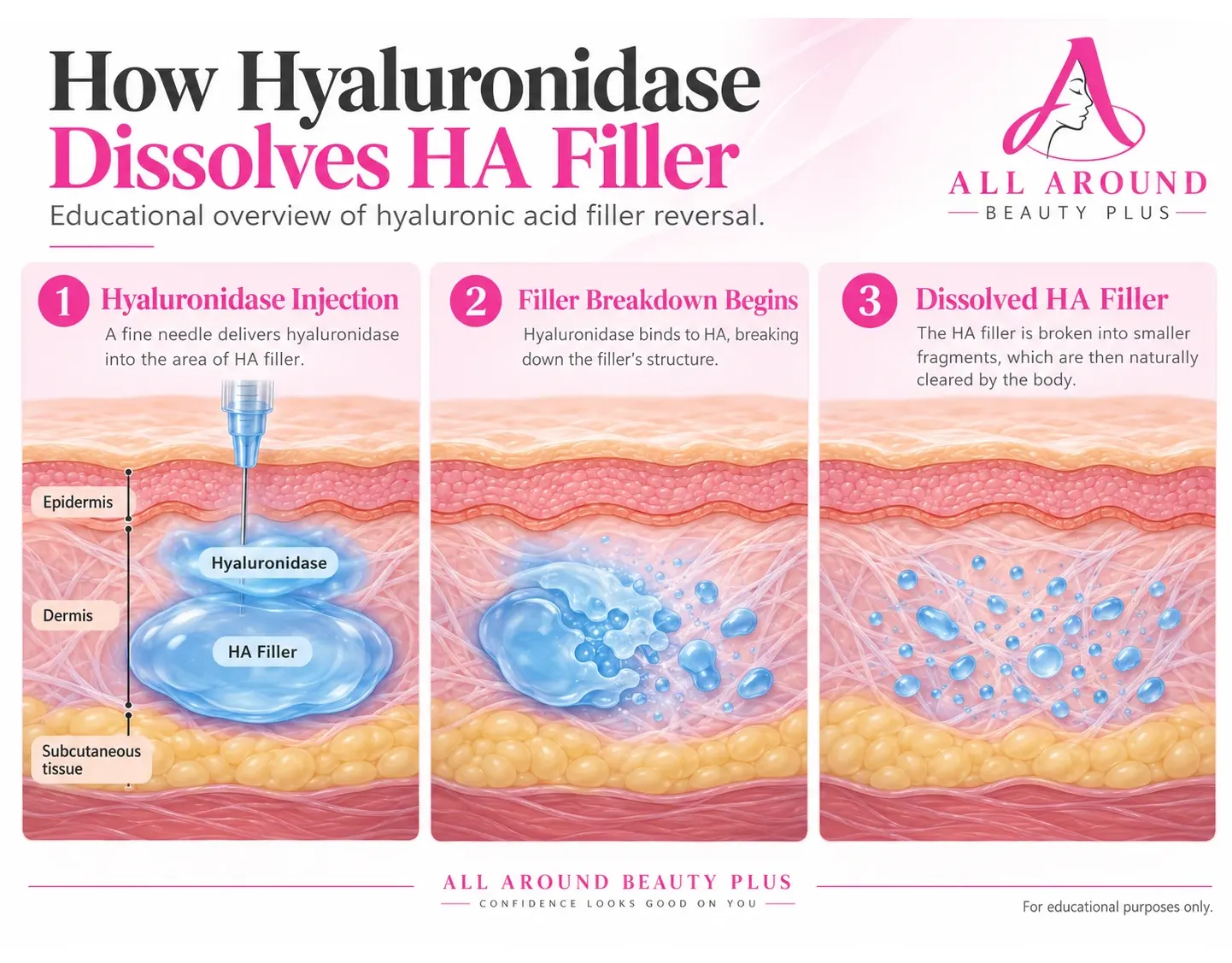
Hyaluronic acid filler can often be reduced or dissolved with hyaluronidase when clinically appropriate. At All Around Beauty Plus Aesthetics, I start by identifying what was injected, where it was placed, what you are seeing now and why you want it changed before recommending a plan.
Quick Answer
Yes, many hyaluronic acid dermal fillers can be reduced or dissolved with hyaluronidase. HYLENEX® recombinant is an FDA-approved hyaluronidase medication, but using hyaluronidase specifically to dissolve cosmetic HA filler is not an FDA-approved indication and is considered off-label.
A Regulatory Detail Worth Knowing
HYLENEX® Is FDA-Approved. Cosmetic Filler Dissolving Is Still an Off-Label Use.
Those two statements can both be true.
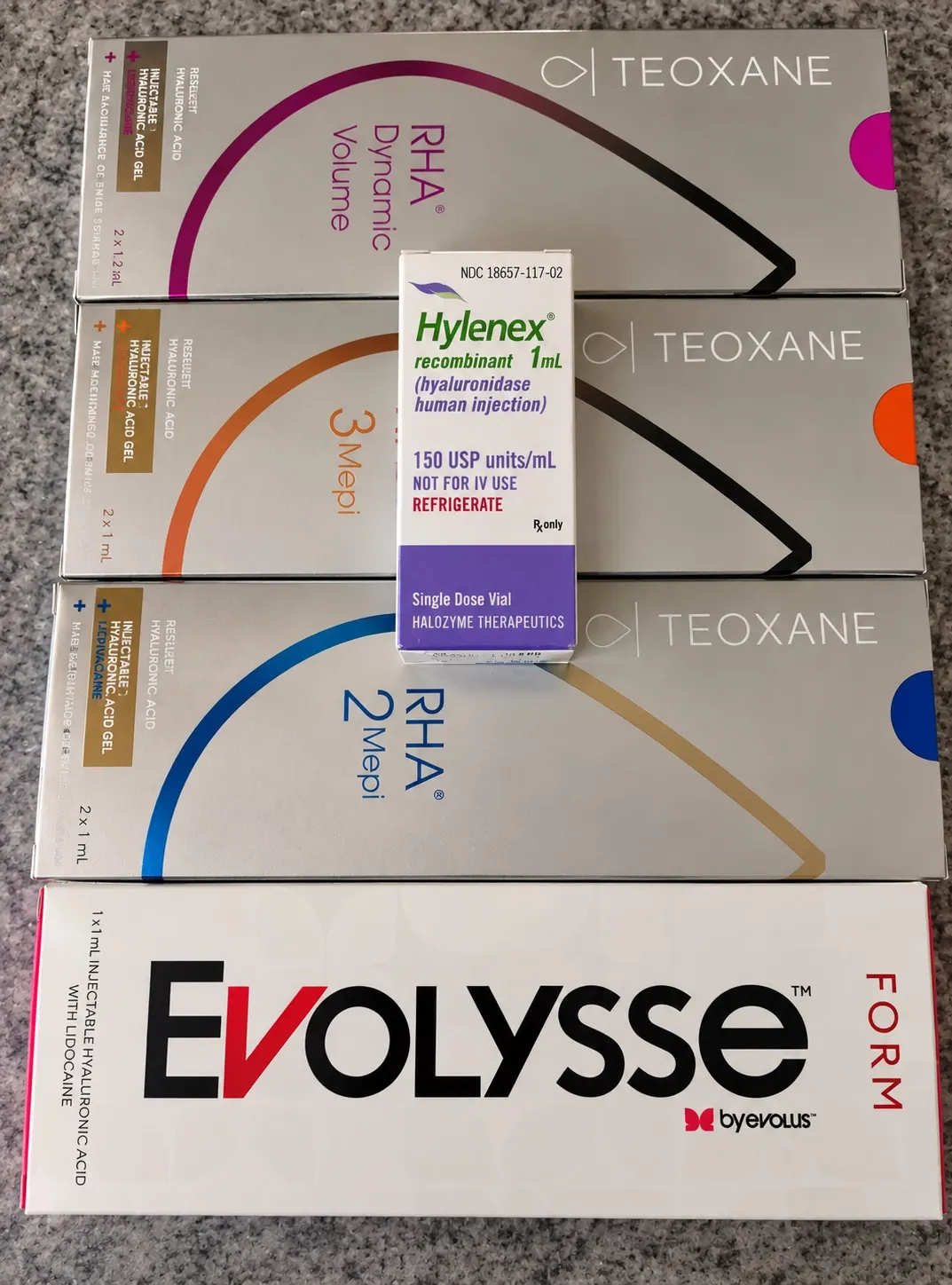
HYLENEX® recombinant is an FDA-approved prescription hyaluronidase product. Its current U.S. prescribing information lists approved uses involving subcutaneous fluid administration, increasing the dispersion and absorption of injected drugs, and subcutaneous urography.
Dissolving cosmetic hyaluronic acid dermal filler is not listed as an FDA-approved indication for HYLENEX®. FDA materials addressing dermal-filler removal specifically state that using hyaluronidase to dissolve HA filler is not an FDA-approved indication.
Why tell you this?
Because “FDA-approved medication” and “FDA-approved for this exact use” are not the same thing. If I am recommending an off-label use, I want you to understand that distinction before treatment rather than finding it buried in fine print later.
Off-label does not automatically mean inappropriate or unsupported. Hyaluronidase is widely used in aesthetic medicine for selected HA-filler complications and unwanted outcomes, and peer-reviewed research continues to examine product differences, enzyme concentration, technique and treatment response.
Primary sources: current HYLENEX® prescribing information and FDA dermal-filler removal presentation .
Product Type Matters
Hyaluronidase Is Not a Universal “Filler Eraser”
The first question is not simply “Do you want it dissolved?” It is “What material are we actually dealing with?”
Hyaluronidase breaks down hyaluronic acid. That is why it is used for unwanted or complicated HA filler. Other filler materials do not respond the same way.
Start With the Reason
Why Might Someone Consider Filler Dissolving?
“I want my filler dissolved” can describe several very different situations. The reason matters because the urgency, evaluation and treatment plan may be completely different.
Unwanted Shape or Volume
The result may feel too full, uneven or different from the original goal.
Suspected Migration
A patient may notice filler outside the intended contour or be concerned about how previous filler is sitting.
Asymmetry or Irregularity
Dissolving may be considered as part of a correction plan when clinically appropriate.
Preparing for a Different Plan
Sometimes the goal is to reduce selected HA filler before reassessing the anatomy and deciding what comes next.
Nodule or Other Filler Concern
A lump, firmness, delayed reaction or other concern deserves an assessment rather than an automatic assumption that every bump should simply be dissolved.
A Possible Complication
Vascular compromise and other urgent complications are not the same as elective cosmetic correction and require prompt clinical evaluation.
Not Every Dissolving Appointment Is the Same
Elective Filler Correction and an Acute Filler Complication Are Different Situations
One may be a planned consultation about appearance. The other may require immediate medical attention.
Elective Correction
Examples can include unwanted volume, asymmetry, suspected migration or a desire to reduce previous HA filler before considering a different aesthetic plan.
These situations allow time to review the filler history, examine the area, discuss tradeoffs and decide whether dissolving is appropriate.
Potential Acute Complication
Unusual pain, skin blanching or a white, gray or blue appearance, vision changes or stroke-like symptoms during or shortly after filler can be signs of a serious complication.
These symptoms should not be handled like a routine future cosmetic appointment.
If you have unusual pain, vision changes, white/gray/blue skin near an injection site, or signs of stroke during or shortly after filler, seek immediate medical attention. The FDA specifically advises urgent evaluation for these symptoms. Read FDA dermal filler safety information →
The Consultation Comes First
What Happens Before I Recommend Hyaluronidase?
The goal is to understand the problem before reaching for an enzyme.
Identify the product if possible
I want to know what filler was used, when it was placed, how much was used and where it was injected.
Evaluate the current anatomy and concern
The same visible issue can have more than one explanation. Volume, tissue, swelling, prior filler and facial structure all matter.
Decide what the actual goal is
Some patients want a selected area reduced. Others want a broader reset. The treatment plan should match the actual goal.
Review risks, limitations and off-label use
Hyaluronidase has its own risks. Response is not perfectly predictable, and more than one treatment may be needed.
Reassess before deciding what comes next
Dissolving is not automatically followed by more filler. The area should be reassessed before a new treatment plan is made.
What I Want Patients to Understand
Filler Dissolving Is More Nuanced Than “Inject and Undo”
Different HA fillers can respond differently.
Peer-reviewed research shows that filler type, composition, enzyme concentration and application technique can influence how readily HA filler breaks down.
More than one treatment can be necessary.
Complete reduction is not guaranteed from one injection. Product characteristics, filler location and enzyme contact can affect response.
“Partial dissolving” is not a perfectly exact eraser.
A conservative treatment can be planned, but hyaluronidase is an enzyme acting on hyaluronic acid. The response is biologic, not digitally precise.
Unknown filler history makes planning harder.
If the product is unknown, the safer next step is usually better information and assessment rather than guessing.
Dissolving does not guarantee the exact appearance you had before filler.
Aging, tissue changes, swelling, prior procedures and the passage of time can all affect what the area looks like afterward.
The right answer may be “do not dissolve today.”
If the concern is not actually caused by HA filler, if more information is needed or if another issue should be addressed first, the plan should reflect that.
Medical Treatment, Not a Reset Button
What Are the Risks of Hyaluronidase?
Filler dissolving has its own tradeoffs. That deserves the same transparency as the original filler treatment.
The current HYLENEX® prescribing information reports local injection-site reactions such as redness and pain and describes allergic reactions, including urticaria or angioedema, as uncommon. Rare anaphylactic-like reactions have also been reported in certain uses.
In aesthetic filler correction, practical concerns can also include swelling, bruising, incomplete correction, an outcome that looks different than expected and the possibility that more than one treatment is needed.

Owner + Operator of All Around Beauty Plus Aesthetics
Dr. Kelley J. Beck, DNP, FNP-C
Family Nurse Practitioner
Board-Certified Family Nurse Practitioner
Owner + Operator
All Around Beauty Plus LLC (All Around Beauty Plus Aesthetics)
Transparency Is Part of the Treatment
You Should Know What Is Being Used and Why
I am Kelley J. Beck, DNP, FNP-C, Family Nurse Practitioner. I personally evaluate the concern, review the filler history you can provide, discuss whether hyaluronidase makes sense and explain the plan before treatment.
I want patients to understand what product is being recommended, why it is being recommended, whether the use is on-label or off-label, what the meaningful alternatives are and what the important risks are before we proceed.
You should always ask why. If an injector will not explain what they are doing, what they are using, what it costs and why they are recommending it, that is probably your cue to run.
If your concern involves dermal filler but dissolving is not the right next step, I will tell you that too.
Pricing Starts With the Assessment
How Much Does Filler Dissolving Cost in Tucson?
I do not want to quote a one-size-fits-all number for a treatment that depends on what product was used, how much filler is present, where it is located, why it is being treated and whether more than one session may be necessary.
The plan and pricing are reviewed before treatment. If you have records from a previous injector, bring them. Product names, dates, amounts, photos and treatment notes can all be useful.
Filler Dissolving Tucson FAQ
Questions About Hyaluronidase and HA Filler Dissolving
Is HYLENEX® FDA-approved for dissolving dermal filler?
HYLENEX® recombinant is an FDA-approved hyaluronidase medication, but cosmetic HA filler dissolution is not an FDA-approved indication for HYLENEX®. FDA materials specifically describe using hyaluronidase to dissolve HA filler as an off-label use.
What type of filler can hyaluronidase dissolve?
Hyaluronidase breaks down hyaluronic acid, so it is used for HA fillers. It is not a universal dissolving agent for all filler materials. If you do not know what product was used, bring any available treatment records or product information.
Can lip filler be dissolved?
HA lip filler can often be reduced or dissolved with hyaluronidase when clinically appropriate. The amount of reduction and number of treatments can vary by product, location, amount present and treatment response.
Can only part of my filler be dissolved?
A conservative or targeted treatment can be planned, but partial dissolving is not a perfectly precise digital eraser. Hyaluronidase acts on hyaluronic acid, and the response depends on filler characteristics, location, dose, enzyme contact and tissue factors.
Does filler dissolving always work in one appointment?
No. Some HA filler may respond quickly, while other products or locations can require additional treatment. Peer-reviewed research shows that filler type, composition, concentration and application technique can affect breakdown.
How fast does hyaluronidase work?
Hyaluronidase begins acting on hyaluronic acid after administration, but the visible result should not be judged by enzyme activity alone. Swelling, tissue response, the specific filler and whether additional treatment is needed can affect when the final cosmetic result can be evaluated.
Can I have filler again after dissolving?
Sometimes, but I do not use a universal refill timeline for everyone. The area should be reassessed after the dissolving process and any swelling or tissue reaction have settled enough to make a sound treatment decision.
What if I do not know what filler I have?
Bring whatever information you have: the practice name, approximate date, receipt, product card, photos, messages or treatment notes. If the filler material is uncertain, that uncertainty becomes part of the clinical decision.
Is filler dissolving the same as treating a vascular occlusion?
No. Elective cosmetic correction and a suspected vascular complication are very different situations. A suspected vascular event requires prompt medical evaluation and should not be treated like a routine future cosmetic appointment.
What symptoms after filler need immediate medical attention?
The FDA advises seeking immediate medical attention for unusual pain, vision changes, a white, gray or blue appearance of skin near the injection site, or signs of stroke during or shortly after dermal filler treatment.
Can filler placed by another injector be evaluated?
Yes. Previous filler can be evaluated even when it was placed elsewhere. Bring as much product and treatment history as possible. Whether hyaluronidase is appropriate depends on the filler material, anatomy, current concern and clinical assessment.
How much does filler dissolving cost in Tucson?
Pricing depends on the evaluation, treatment area, suspected or confirmed filler product, amount present and whether more than one treatment may be needed. The treatment plan and price are reviewed before treatment.
Sources & Further Reading
The Claims on This Page Are Meant to Be Checkable
For FDA status, filler-removal guidance and safety, I prefer primary government sources. Peer-reviewed literature is used for more detailed discussion of hyaluronidase response and clinical use.
Official U.S. labeling for HYLENEX recombinant, including FDA-approved indications, warnings and adverse reactions. Current label revised 11/2024.
Read the official label →FDA presentation from August 13, 2025 stating that the exact use of hyaluronidase to dissolve HA filler is not an FDA-approved indication.
Read the FDA presentation →FDA consumer and provider information covering filler safety, vascular complications and symptoms that warrant immediate medical attention.
Read FDA dermal filler guidance →2025 Journal of Cosmetic Dermatology article examining how filler type, concentration and application technique influence HA-filler breakdown.
Read the PubMed record →2025 Journal of Clinical Medicine review covering formulations, safety and clinical use of hyaluronidase in aesthetic medicine.
Read the PubMed record →2026 systematic review and meta-analysis evaluating hyaluronidase protocols for HA filler-related vascular complications.
Read the PubMed record →Start With the Concern
Concerned About Previous Lip Filler or Dermal Filler in Tucson?
Tell Kelley what was injected if you know, when it was done and what is bothering you now. The goal is not to force every concern into a “dissolve it” answer. The goal is to understand what is there and make the next decision intelligently.