
Advanced Botox Techniques: Why Injector Training Matters
Advanced Botox techniques, facial anatomy, cannula techniques, and DAXXIFY treatment timelines were just a few of the topics covered during a day of aesthetic education here in Tucson.
On November 5, I had the opportunity to spend the day learning from Erika Barry, MSN, NP-C, better known in the aesthetics community as @InjectorBunny.
Erika is an internationally recognized aesthetic injector and educator with an impressive clinical background. Her education includes Johns Hopkins and the University of California, San Francisco, where she also worked in plastic surgery. She has trained medical professionals across the United States and internationally and founded her own injector education company, Aesthetic University.
She’s incredibly knowledgeable, genuinely funny, and refreshingly down-to-earth. What stood out most was her emphasis on understanding anatomy, knowingwhy a technique works, and recognizing when not to inject. She makes advanced concepts approachable without oversimplifying the science.
You can learn more about Erika’s background through her professional biography at Moksha Aesthetics.
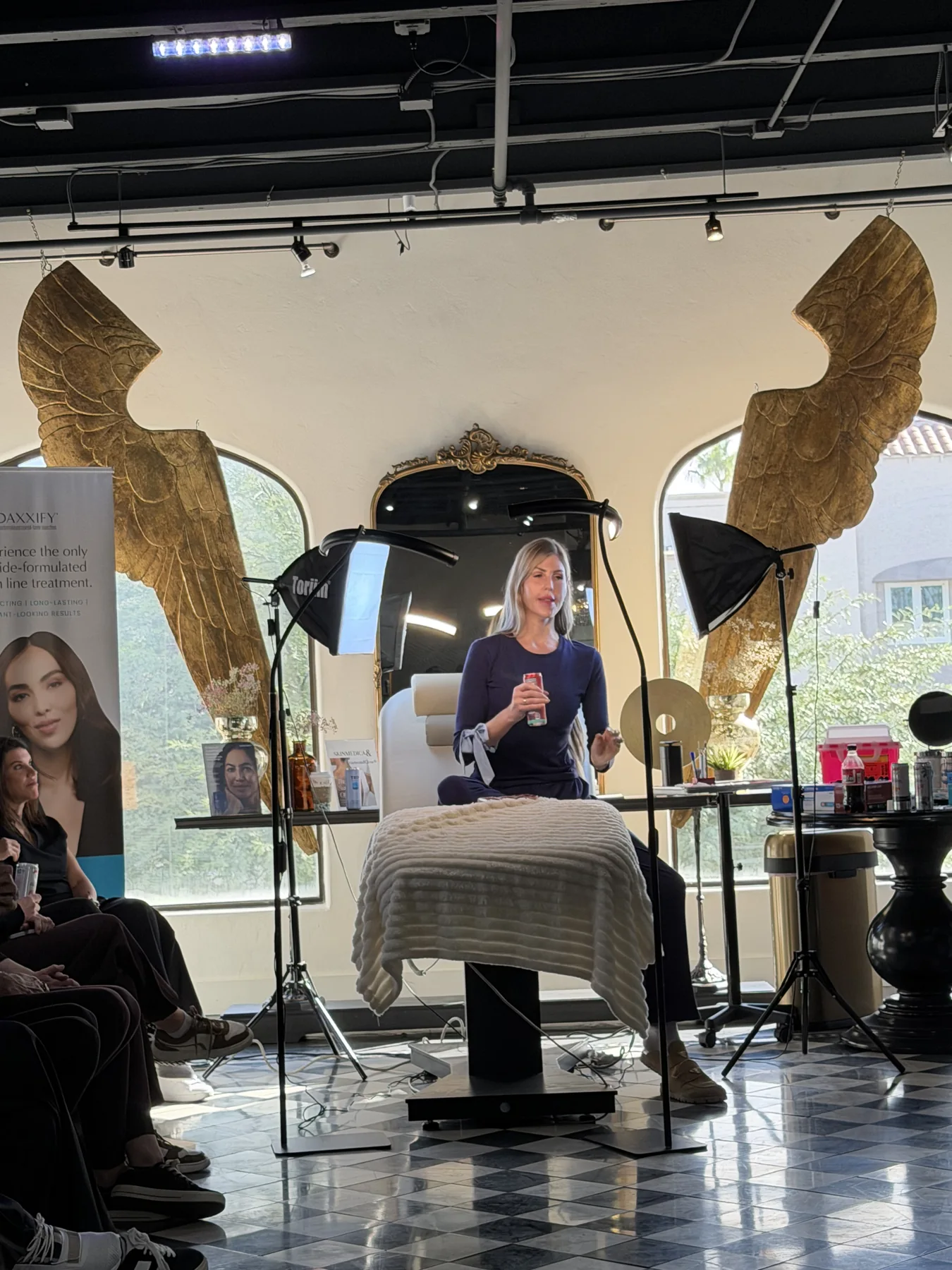
The day included hands-on training at Skinjectables, followed by an evening educational seminar at Hacienda Del Sol covering DAXXIFY and the RHA Collection.
I’ve worked in medicine since 2006 and have spent more than six years in aesthetics. I still get excited about opportunities like this, not because I need another certificate on the wall, but because aesthetic medicine keeps evolving. The people trusting me with their faces deserve someone who keeps learning.

Facial Anatomy: It’s Not Just Where You Inject
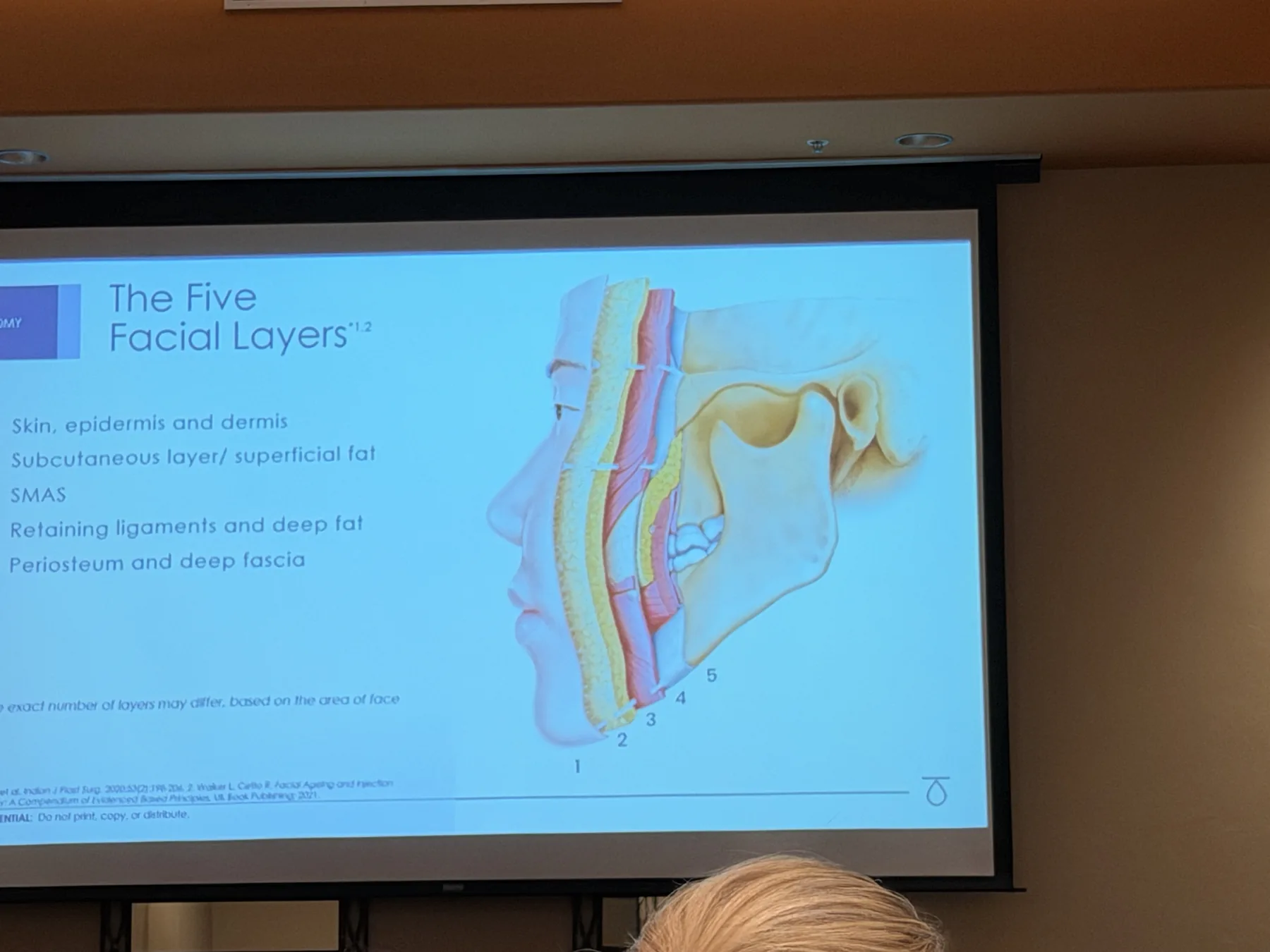
One of the biggest focuses of Erika’s training was something patients probably don’t hear discussed very often: the plane of injection.
Your face isn’t one uniform layer of tissue. It contains skin, fat compartments, muscles, connective tissue, blood vessels, and nerves, all arranged in complex anatomical relationships.
When we’re discussing dermal fillers, understanding those layers is essential. The depth and location of product placement can influence how filler supports facial contours and which anatomical structures need to be considered during treatment.
That’s why I don’t believe in treating every face with the same injection map. Two people can request the exact same treatment and need completely different approaches.
It’s not about memorizing injection points. It’s about understanding the anatomy underneath them.
Cannula vs. Needle: Why Technique Matters
Another major part of our hands-on education involved cannula techniques.
For anyone unfamiliar with the terminology, a cannula is a flexible, blunt-tipped instrument that can be used to place certain dermal fillers. Unlike a traditional sharp needle, a cannula can sometimes allow an injector to access a treatment area through fewer entry points.
But here’s something important: a cannula isn’t automatically better or safer for every treatment. Both needles and cannulas have advantages, limitations, and risks. Neither eliminates the possibility of vascular injury or other complications.
The decision depends on the treatment area, the patient’s anatomy, the product being used, and the intended result.
Erika spent considerable time discussing insertion planes and demonstrating cannula techniques. For me, that was one of the most valuable parts of the experience. Not because there’s one perfect technique for everyone, but because understanding different approaches gives an injector more options when developing an individualized treatment plan.
DAXXIFY: Why Treatment Timelines Matter
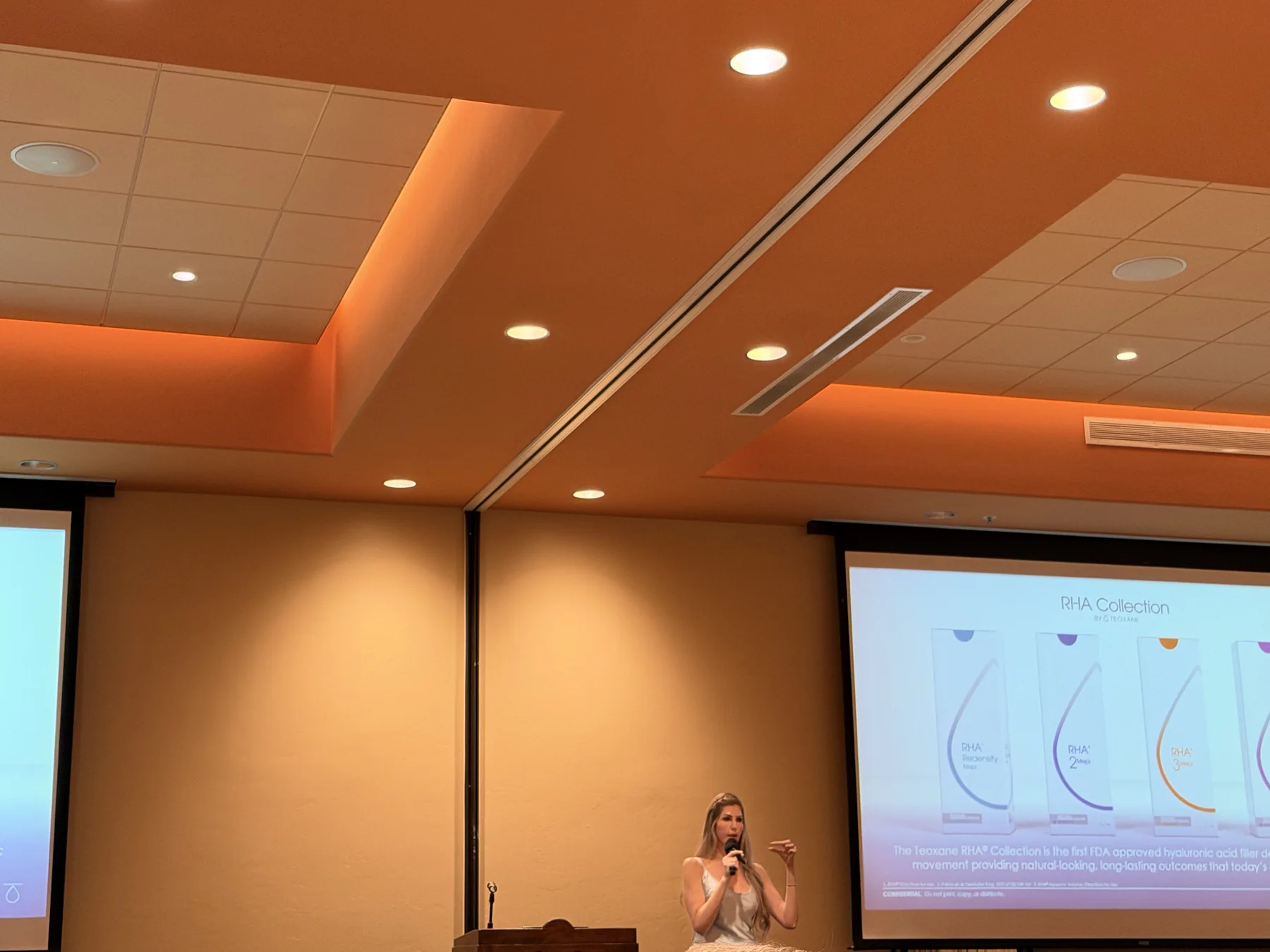
Later that evening, I attended the Revance Portfolio Didactic Program at Hacienda Del Sol, covering DAXXIFY and the RHA Collection. One discussion that particularly stood out involved DAXXIFY treatment timelines and follow-up assessments.
DAXXIFY is a prescription neuromodulator used cosmetically to temporarily improve moderate to severe frown lines between the eyebrows in adults. Like other botulinum toxin treatments, its effects develop over time. Patients may notice changes relatively early, but that doesn’t necessarily mean their response can be fully evaluated immediately.
One important takeaway: Erika discussed evaluating DAXXIFY results at approximately four weeks. Week 4 was also the primary efficacy assessment time point in DAXXIFY’s pivotal cosmetic trials. That study endpoint is useful context, not a universal rule for scheduling follow-up or deciding on additional treatment.
That doesn’t mean every patient must wait four weeks to contact their injector or that concerns should be left unaddressed until then. It means understanding the expected treatment timeline is important when evaluating results and discussing whether additional treatment is appropriate.
I believe patients deserve realistic expectations, not promises that everything will look perfect by a particular day. Curious how different neurotoxins compare? I’ve written a separate guide to DAXXIFY vs. Botox, including important differences to understand before choosing a treatment.
RHA Fillers and the Importance of Facial Movement
The evening seminar also included education on the RHA Collection of hyaluronic acid dermal fillers. One thing I appreciate about modern filler education is the emphasis on evaluating the face both at rest and during movement.
Our faces aren’t static. We smile, laugh, talk, frown, and make hundreds of subtle expressions throughout the day. Understanding how facial tissues move and how different filler formulations behave is an important part of individualized treatment planning.
The goal isn’t simply to add volume. It’s to understand what the patient wants to improve, assess the underlying anatomy, and determine whether filler is appropriate in the first place.
Sometimes the best treatment plan involves less product. And sometimes it involves no product at all.
Learning Alongside Tucson’s Aesthetic Community
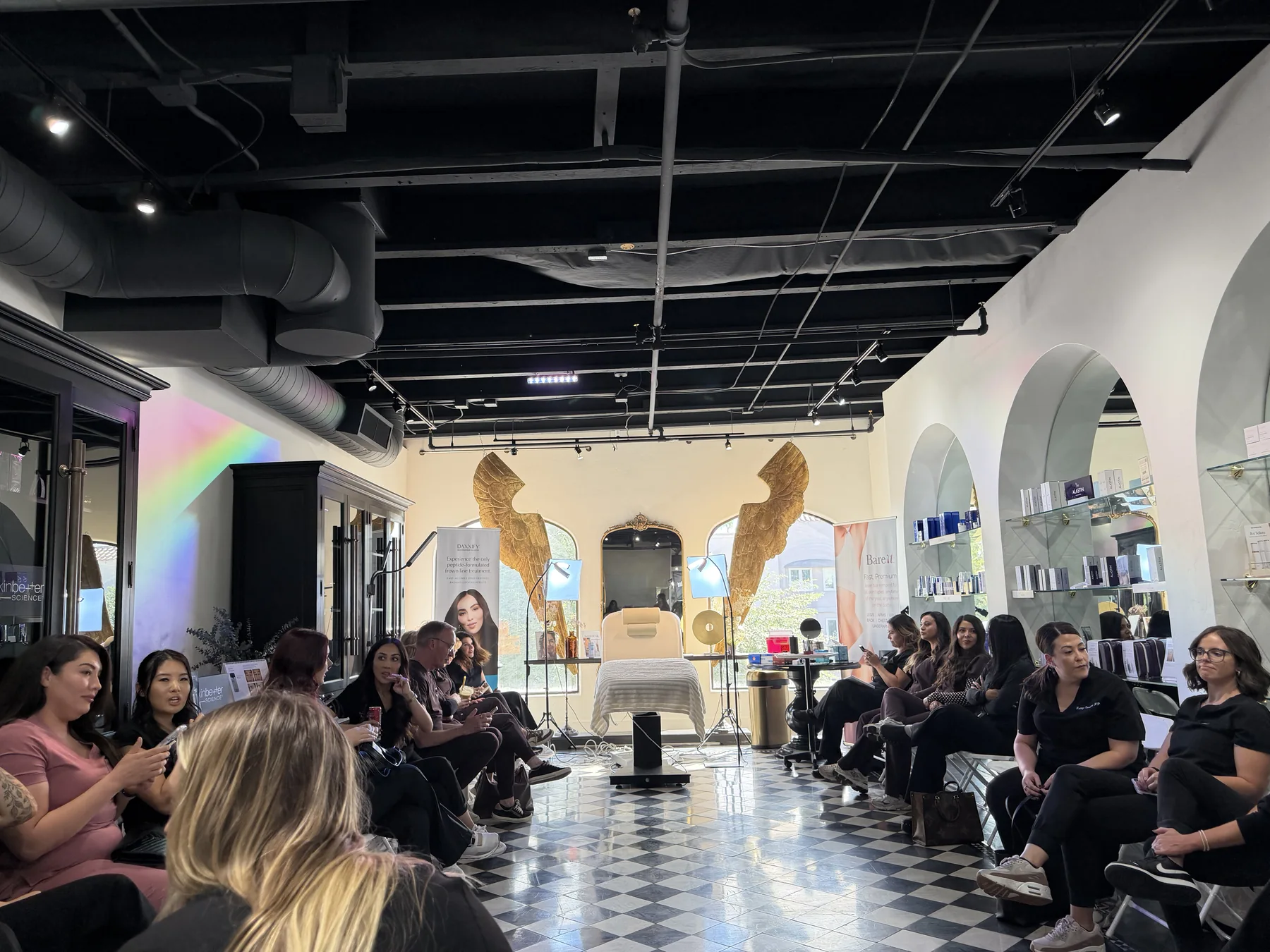
Beyond the clinical education, another highlight was spending time with fellow aesthetic professionals from around Tucson. The hands-on training was hosted at Skinjectables, and the evening program brought together local injectors for additional education and discussion.
I genuinely appreciate seeing our community come together for opportunities like this. We may operate different practices, offer different services, and approach aesthetics with our own individual styles. But continuing education, professional accountability, and patient safety are things we should all care about.
I’ve also enjoyed becoming more involved in Tucson’s professional aesthetics community through the Tucson Aesthetics Advisory Board. I shared more about that experience in Collaboration Over Competition: Tucson’s Aesthetics Community Comes Together.
There’s tremendous value in sharing knowledge and learning from one another. When healthcare professionals continue improving, patients stand to benefit.
What Does Advanced Injector Training Mean for My Patients?
I don’t expect my patients to know the difference between every injection plane, cannula technique, or neuromodulator formulation. That’s my responsibility. What I do want them to know is that I take those details seriously.
When someone comes to me for botox-type treatments, DAXXIFY, or dermal fillers, I’m not starting with a predetermined number of units or syringes. I’m starting with their anatomy, their concerns, and their goals. Then we discuss what’s realistic, what makes sense clinically, and whether treatment is appropriate.
I don’t start with “botox units.” I start with you.
Continuing education helps me keep refining that approach. After spending time learning from Erika Barry and connecting with other Tucson injectors, I’m reminded why I love this field so much. There’s always more to learn.
If you’re considering treatment, explore my botox and neurotoxin treatments in Tucson or read my guide to choosing a qualified aesthetic injector.